Archive for the ‘Features’ Category

Review: In Decay: Stitching America’s Ruins

Whitehot Magazine of Contemporary Art, August 2012

Eric Holubow and the Presumed Descent of America

Amid hand-wringing and finger-pointing over the presumed descent of America sits Eric Holubow’s photography, nestled into a corridor at the Chicago Cultural Center, as summer tourists stop by to gawk at the pristine renderings of tragic architectural wrecks. Dentures out, wig mislaid, houserobe open, arcing in some graceless pose, these structures hold their pride in dilapidated openness, grateful to be sought before the final collapse. From an architectural (though not technical) standpoint, Holubow is Paparazzi in the nursing home.

The work has been seen by many – including the artist himself – as emblematic of a cultural autumn, or mutely damning exhibits in some prosecution. The title of the CCC showing is “In Decay: Stitching America’s Ruins”, and the metaphor is accurate in that the works indeed form a coherent whole, a fabric felted of fraying scraps. But this is not simply socioeconomic documentary photography, Holubow is not merely an archivist, and he seems in his writing to neglect his collaborators, namely the great forces of Nature and Time, as if the gorgeous forms he captures were scandalous social narratives and not irreplaceable works of generative art.

What is the difference between generative art and what we might call (with a wink) degenerative art, the art of decay? In both cases, the artist’s control is in the parameters, and at this, Holubow proves able to set his frame with great sympathy and circumspection, and in many of his images, you can feel the labored breaths of these once-ornate cavities. In “Prison Block”, a shot inside a Tennessee prison so onerous that a state law was passed forbidding its use, a single pole unevenly bisects the frame, rising to the peeling roof, and Holubow’s lens distorts the cellblock rails so that they curve away, both opening and compressing the space, lending action and intimacy to what must be oppressively drab rectilinear environs.

Sharing space with “Prison Block” in the exhibit is “Nuclear Potential”, a squat concrete cylinder viewed from within its circular enclosure. The photograph has a quite static composition, but it is electrically alive. Moss of a radioactive comic book green lingers innocently as rebar twists skyward above the never-completed reactor housing. Short, empty pipe ports gesture to nowhere. Cut through the curving concrete face is a perfect square, and through it we can stare past its opposite at the back of the enclosure. In many of the pieces in “In Decay”, Holubow presents us, center frame and sitting quietly at the rear, with a door or window we might not notice at first glance.

One such door greets us as we face laterally across Gary Indiana’s Palace Theater, on a balcony edge which curves away and back again to the middle of the frame. Above, the blue-tiled roof has some blotchy disease. Below, a drape with a faded Mediterranean scene still hangs gamely from the proscenium. All of the seats on the main floor are scattered and flattened in a delicious array of scalloped orange forms. The orchestra pit is shamefully exposed, made up in white dust. Above, set into the middle of the opposite wall, a story above the floor, sits the intriguing little door. It is easy to imagine that it leads mischievously to a straight drop down the exterior of the building. Holubow does not show us any exteriors, but these doors and windows cunningly featured hint at a way out – maybe, for the artist, at rescue?

More overt are the beams of light which Holubow captures blasting through cracked stained glass, or else spilling through fissures in ceilings. These luminous interlopers are unnecessary, especially in the case of the many religious interiors captured in this show. The world is littered with religious structures in all states of disrepair, and though their plight is moving and their interiors often gobsmacking, the artist edges disturbingly close to postcard elegies with some of those shots. Part of western religion itself is the tension between the ever-denuding material world and the promised lofty constancy. There is more pathos in the show’s degraded utilitarian spaces.

In a ruined Detriot apartment building lobby, a single chair ignores a baby grand piano pitched forward on its face, its lids open to eternity, its keys unevenly serrated like a player piano frozen in action. A lonely textbook rests in an abandoned classroom, where graffiti decorates the chalkboards and the ceiling has flaked down to cover the children’s desks in with a scatter of serene paint chips, and the cathode-ray television set above on the wall is pristinely preserved. At the Packard Auto Plant, saplings thrive under the angled glass factory roof, which looks out like a wrenched-open greenhouse on acres of drab green farmland. These are the better moments – and they are moments – as many of the structures featured no longer exist.

The exhibit begs to draw us into this chronology, with flatly described histories posted next to each photograph; though interesting, these statements do not explain or improve the resonance of the pieces, which lies in the physical and anthropomorphic subjects and the gentle, accurate care afforded them by the artist. Given the tendency to see ourselves in our constructions, we might connect this exhibit with an inhumanity, a callousness, but sympathy for victims is insufficient: to a photojournalist, there is a story. If the story here is the sorry state of neglected eastern American buildings, then we have some entrancing assets for the local paper’s editorial page. But there is more. Take, for example, the medium-size prints of these cavernous spaces. In resisting the urge to render them in large format, Holubow gives us two dimensional dioramas, into which we peer at characters who are works in progress.

The grainy facade of the imposing dome in a New York tuberculosis hospital is pitted with bits of color, as if a pixellated projection were fixed on its surface, while at its center a stately, radially symmetrical, and quite intentional piece of stained glass stands ground amid the noise. In another piece, a five-part tapestry of windows reveals the tableau of their exterior, a skeletal, rural backdrop progressing to the new commercial, the building itself observing its own past and unreachable once-future. All this is seen in random keyhole hints, through spattered patterns of fractured industrial glass.

In gnarled rebar and capricious splays of lumber, we see the human hand, but the human hand removed. In its place step the natural forces, firm and sure, sparing parts and laying waste to others, as chaotic, detailed, and grandiose as the best code art iterations, and infinitely more expressive. Our senses themselves follow such natural patterns, in nerve endings and optical cones and the tangled improbability of our brains. Whether one prefers the sublime proportions of classical architecture or pulsing organic forms, the clash of these impulses informs everything aesthetic, and it is this clash – not economic decrepitude, not cruel neglect – which humbly animates Holubow’s photographs.

Then we walk out from the exhibit into the exquisite foyer of the Cultural Center itself, and eye the stonework and glittering mosaics, and wonder if we’d wear the same aesthetic blinders, were this luscious public landmark – with its crown, largest Tiffany dome in the world – to appear in one of Holubow’s photographs, and itself become a piece of future wreck-porn, and we think then again, maybe Holubow has a point.

Published in Whitehot Magazine of Contemporary Art

Flowering Open

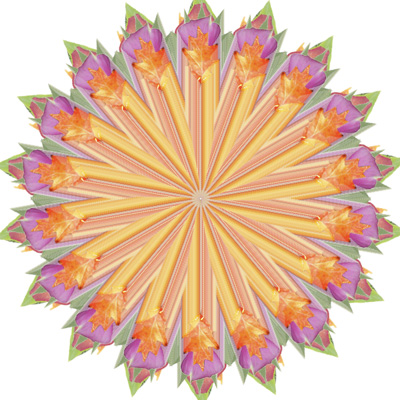
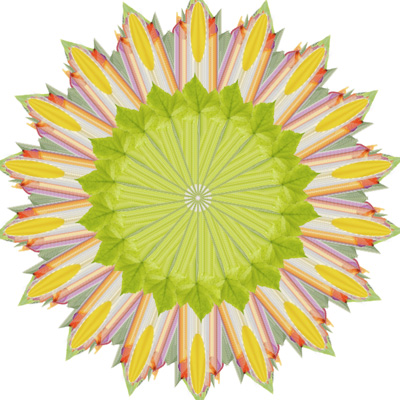
This is an application I wrote in Processing to act as a meditative visualizer for my wife during our pre-labor practice and meditation.

After hearing that it can be helpful for a laboring woman to have a point of visual focus and to concentrate on imagery of an opening flower (to help everything open up that needs to), I built this full-screen visualizer to play during our breathing sessions.  We brought it along to the delivery room, but let’s just say anyone who wants to whip out a laptop on a woman in active labor has my sympathy for what follows.

Dancing At The Revolution

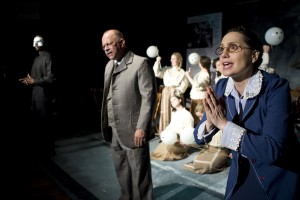
EP Theathre. Original music production / Sound design. Chicago, 2008.

For this highly stylized theatrical retelling of the life of rabble-rouser Emma Goldman, I wrote music that updated the period socialist-songbook style with some modern sounds and improvisational elements.  Here are the overture and the curtain music, two of my favorite pieces from the show.


“Overture”
“Curtain: Go Down, Em”

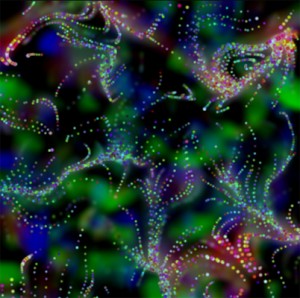
Fluids – A Vector-Based Particle System

This project began as an exploration into programming for fluid dynamics.  That research acquainted me with the subject of vector fields and how they represent the behavior of fluids and gases.  This thread of investigation led me to the world of cellular automata, including Conway’s beautiful Game of Life.

While this project doesn’t approach the subletly or revelatory power of that fundamental experiment, it does include dozens of discrete particle objects, each following its own destiny through the vector field, becoming affected by what it travels through, by the other particles that it meets along the way, and leaving trails as it veers around.  There’s also a certain amount of intrinsic randomness built into the system, some of which can be adjusted by the performer in real time.

The system is also built to accept an incoming stereo audio signal and adjust the particles based upon the audio feed, which can be run in live through an input or make use of a computer’s built-in mic.

This project was originally created to be a stand-alone app meant to run full-screen on a laptop hooked to a projector for a performance. There was also a web-friendly version created, although it’s no longer as web-friendly as it was when created, since that version was in Flash.

Future plans are to port the project to Processing or WebGL.

Mt Greenwood Sound Sculpture

Mt. Greenwood Park.  Performance, Audio Co-Production. Chicago, 2008.

This piece was a lot of fun – a performance to inaugurate Chicago Sculpture Works’ piece, Sound Sculpture. The inauguration of the new park and the sculpture itself was capped by a performance by myself, Jacob Worley-Hood, and some percussionists from around Chicago.

Jacob and I co-produced the audio recording for the event, which is the audio track for the video clip below.  The performance was a structured improvisation created by the performers in the days before the inauguration.

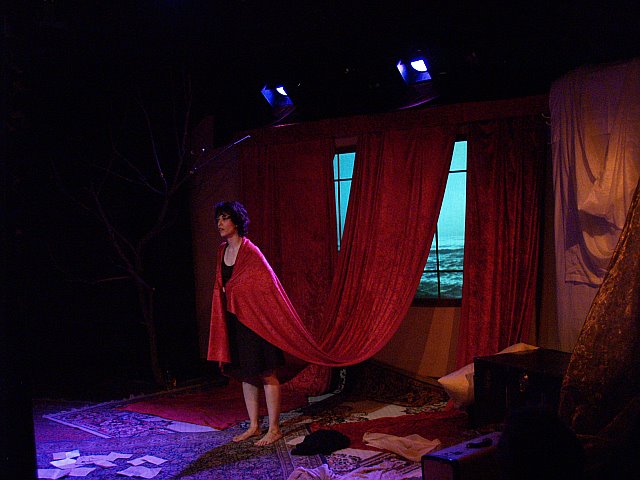
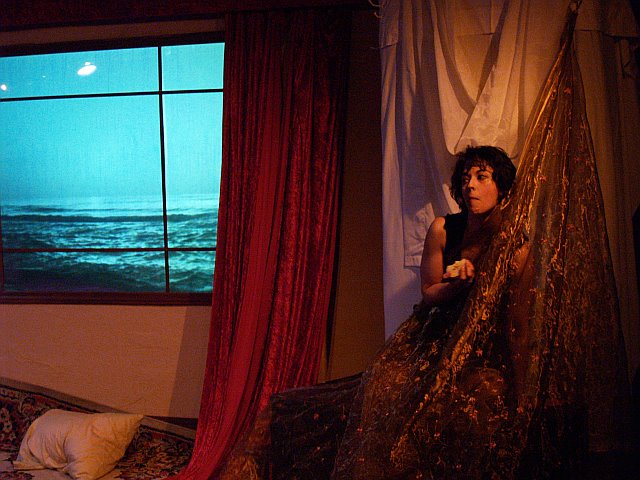
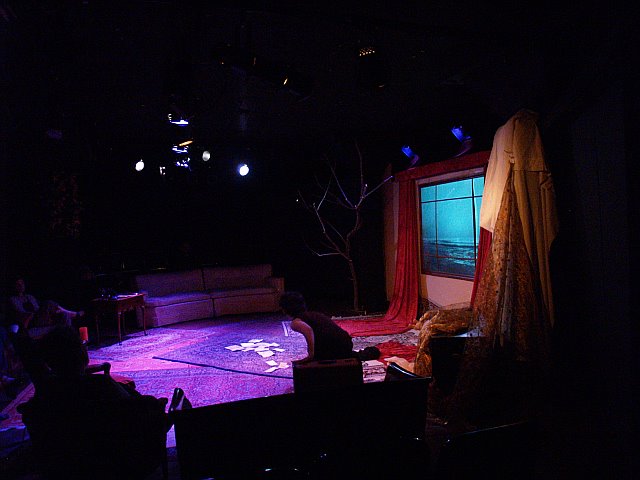
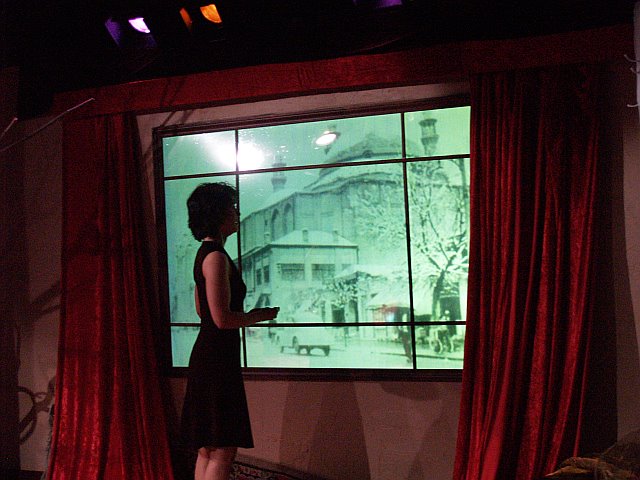
Bride of Acacias

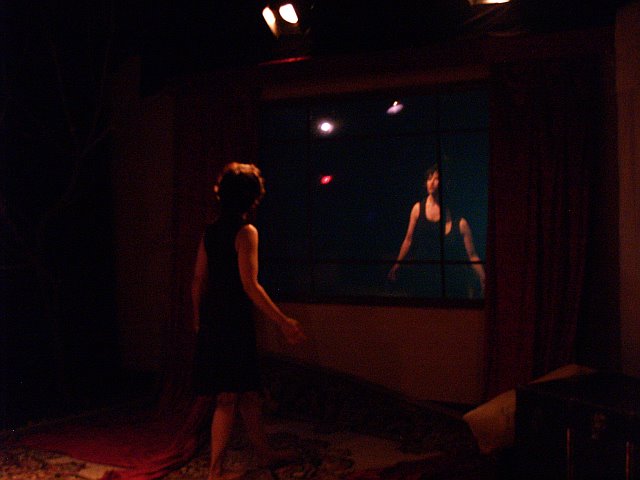
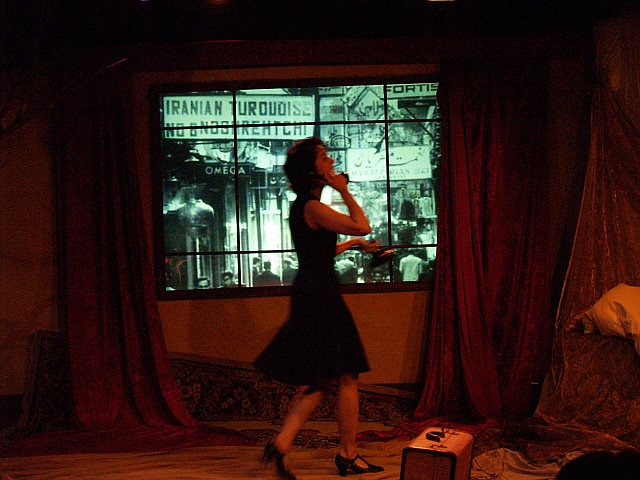
Chopin Theatre. Design / Video / Sound. Chicago, 2006

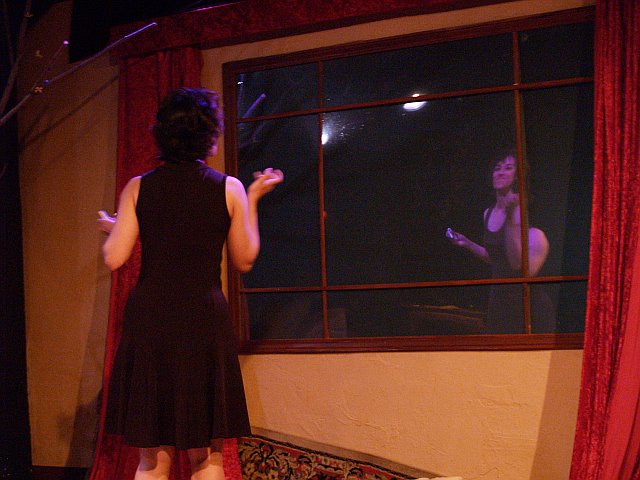
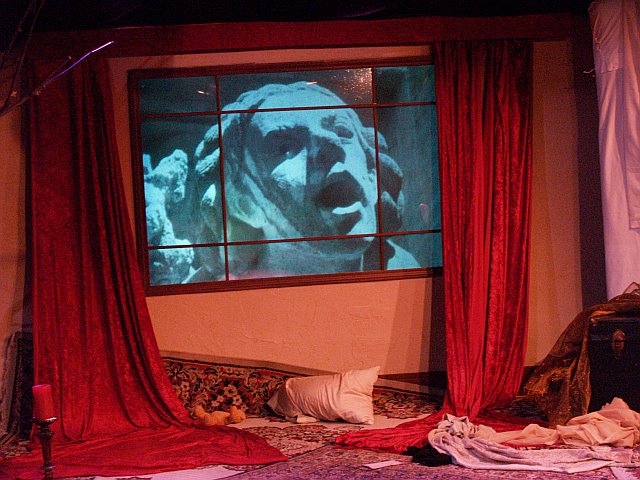
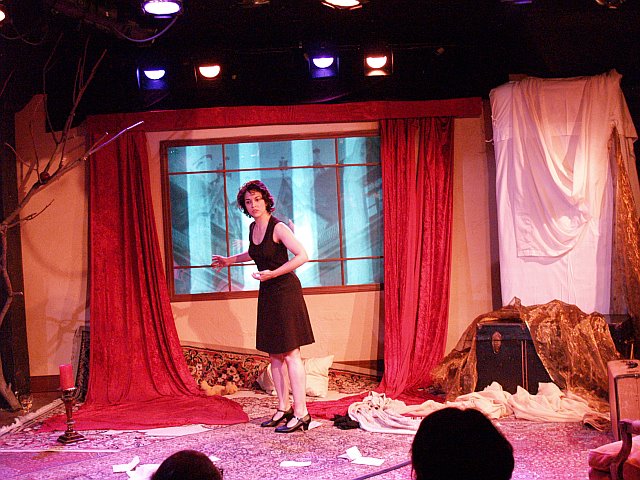
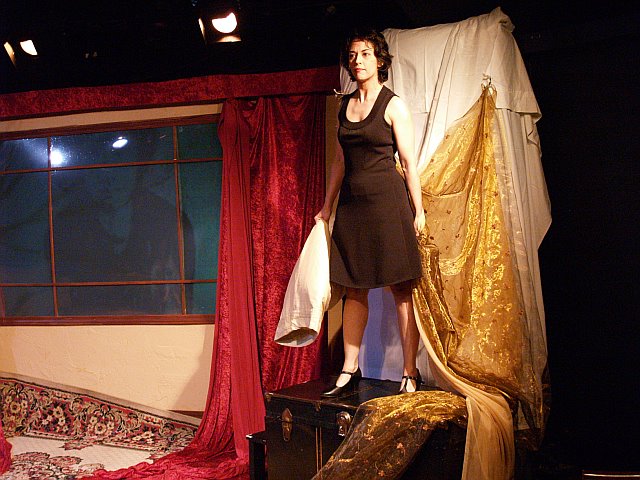
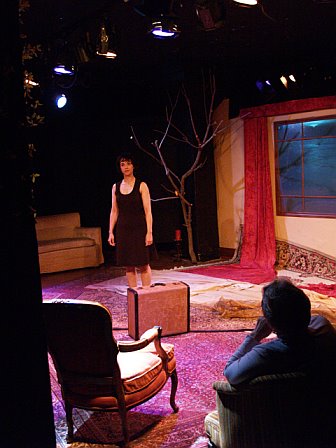
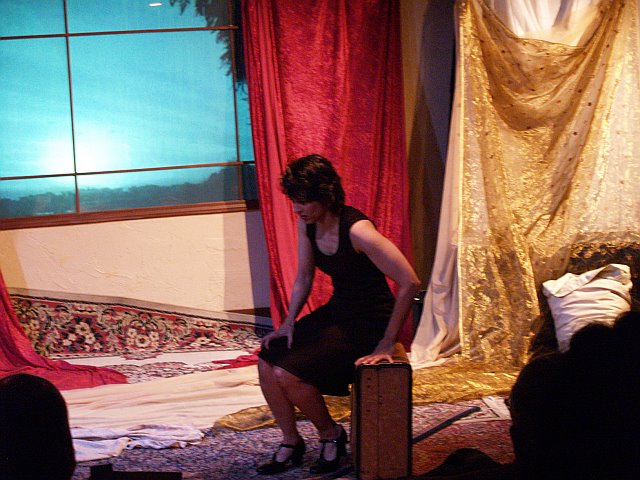
A whilrwind of a one-woman play, this biographic piece traveled around Iran and to Europe and back, following the life of legendary Iranian film-maker Forough Farrokhzad.

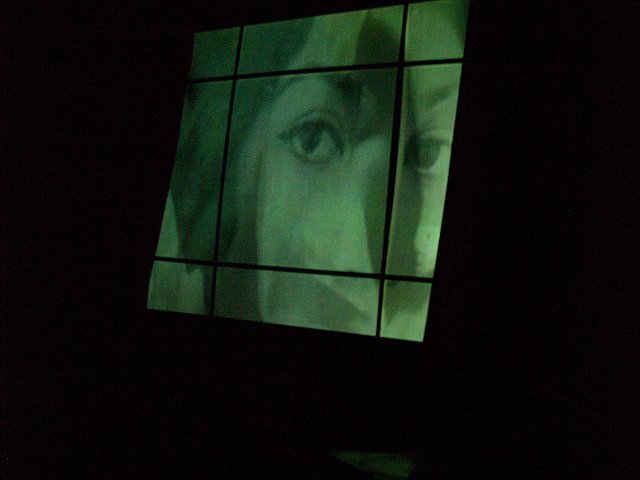
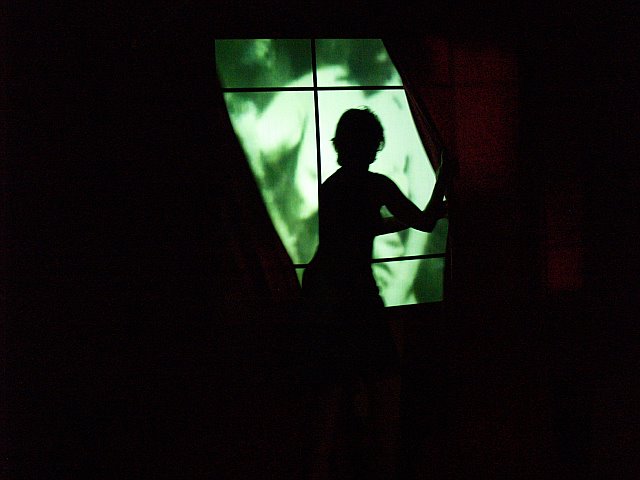
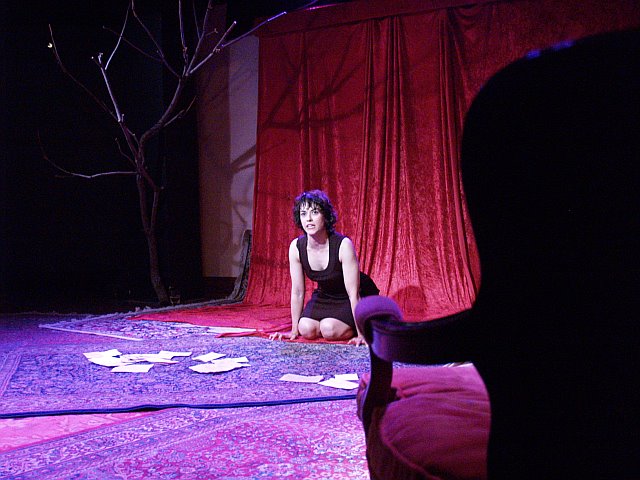
Working with source video brought from Iran by the playwright and my own thematic motion graphics, the designer and I came up with a model that would work both as a scenic backdrop and as a metaphor for a woman who often looked at the world through the barriers of her identity.

{ photos by gretchen werner }

Review: Chipaumire & Mapfumo at the MCA

Whitehot Magazine, October 2009

Nora Chipaumire with Thomas Mapfumo and The Blacks Unlimited @ MCA Chicago

“Welcome to Zimbabwe.”

Where the rains fall in computer-generated light projections?  Where Wolfgang Puck desserts are sold in the hallways?  Where Chimurenga music plays, and the only dancing is choreographed?

No, this statement stakes a claim.  Nora Chipaumire, her legs rooted downstage, upper limbs slapping, unfurling, proclaims through her teeth today’s interest rate: one million percent.  Then, she issues a dare.  “Life is good!”  Desperation, conviction, and joy fight silenty in her posture.  Her vocal outbursts claim the prerogative of perspective.  This is a catharsis, not a travelogue.

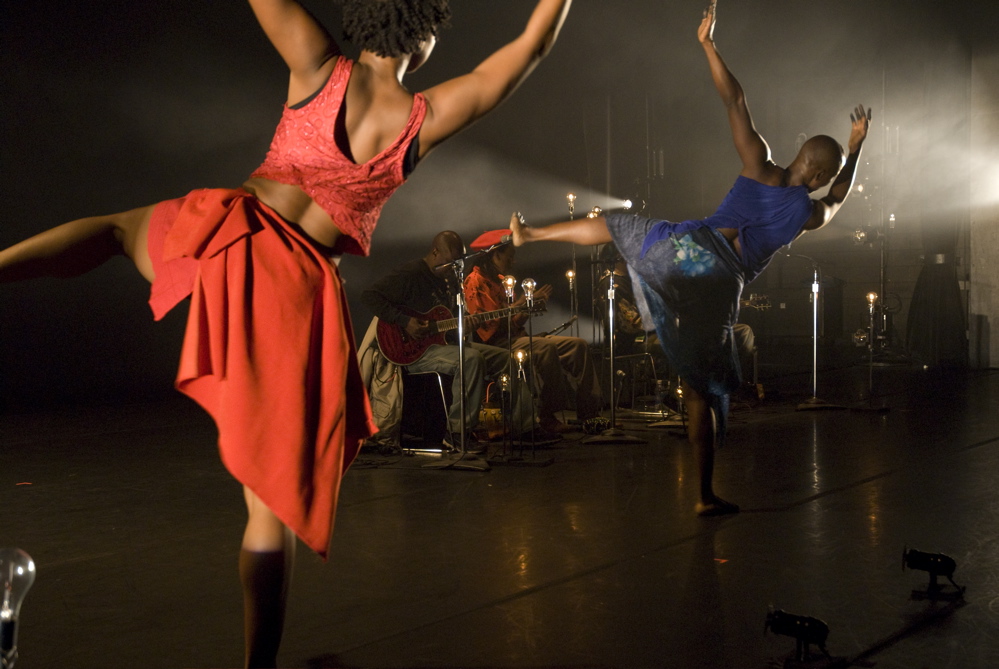
Behind her, the legendary Zimbabwean band, Thomas Mapfumo and the Blacks Unlimited, sit among their tiny amplifiers and pluck at their instruments.  Around them glow unfrosted lightbulbs, the naked filaments dancing and sputtering.  The band could be sitting on their suitcases, near an airport tarmac or playing impromptu at some kind of depot.  The towering, flat brick backdrop of the MCA Stage is any brick wall, and it renders to the musicians a human scale.  They wind their lattice melodies out through the space and retract them with expert dynamic control.

The dancers, Chipaumire and her partner, Mallory Starling, appear and immediately begin taunting with their cleverly designed torn jackets and dyed dresses.  Flip up some cloth and hide my face.  Flip up some cloth and show you my ass.  They are teasing dance traditions and identity art from within, but not in the winking, self-aware way – there is too much ground here.  Starling and Chipaumire show off strength and poise, but their movements, choreographed by Chipaumire, express a freedom that is belied by rare and rewarding moments of unision.  In one piece, Chipaumire spends almost the entire song framed in a block of white light against the brick, gazing down, while Starling contorts plaintively in the foreground.  This is high identity, saying at once: let me expose for you the brutality of my cliche, and by the way, isn’t life good?

Unlike so much political art, there is no manufactured, small-batch emotion.  These are real revolutionaires; Mapfumo was the musical voice of the revolt that birthed Zimbabwe in 1979, and also the musical voice who exposed the corruption of his once-hero Robert Mugabe, leading to the singer’s self-exile.  Mapfumo, The Blacks Unlimited, and Chipaumire all seem caught in the same expatriot glare.

Chipaumire steps forward out of her own silhouette and lifts her companion from the ground.  Digital rain falls against the brick.  She tries to elevate Starling but cannot.  They perform a limping, grasping waltz, while Mapfumo and The Blacks Unlimited unravel melancholy protest rhythms.  Everyone is leaning on everyone else, dancers and musicians alike.

The performance, a world premiere collaboration, features a melodramatic profusion of fog machine and some digital projections that, while proficient and occasionally engrossing, dangle off the edge of the rock concert ethos.  This is a modern dance and musical performance, but it is definitely not a rock concert, not with Chipaumire’s energy dominating the intimate space.  Still, the technology that hums through every aspect of the performance is fitting, thematically: Mapfumo was the first to render traditional Shona music in electric instruments such as the Les Paul guitar that sits in his lap all evening.

For the polyrhythmic complexity of their music, Mapfumo and company are overwhelmingly still, physically, almost hunched.  They give off not the proud air and studied quietude of classical musicians, but the bared conspiracy of an opened plant bud.  They are sitting in a straight line but playing in a circle.  The dancers contort at their flanks.  Chipaumire has one leg planted, the other extended at a perfect angle.  Her torso winds and dips.  The music turns through its self-iterative loops.  She turns to stomp at the ground, an exultant smile on her face.  Gems of sweat drop from her head, through the light, and splash the stage.

In fairness, it must be asked, is this just another well-performed curiosity, exoticism playing with modern lenses?  But then it must also be asked, in fairness to whom?  The genuine has a lovely habit of adopting any mantle it chooses.  In their first collaboration, Mapfumo, The Blacks Unlimited, and Chipaumire have established the vanguard as their baseline.  In bringing their art to the world, they face off in a common future, for better or worse.

Published in Whitehot Magazine